
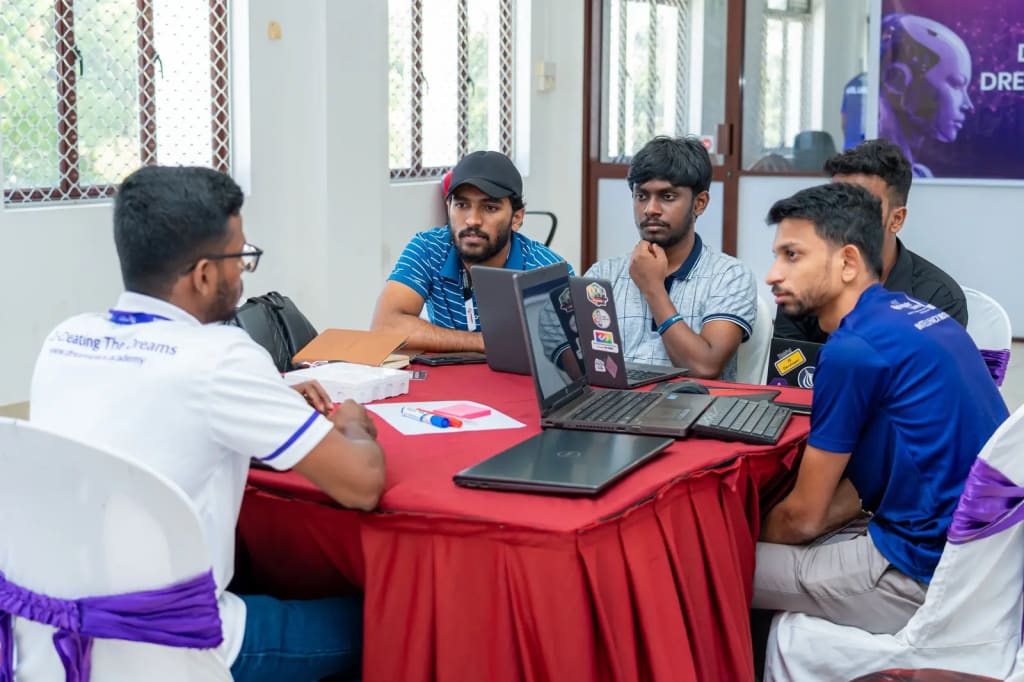
University students from across Sri Lanka built AI for problems in their own communities, then pitched to a jury from TRACE and Eastern University.
- Dates
- Online proposal round, January to February 2025. Finals on site, 20 to 23 February 2025
- Venue
- The DreamHack co-working floor, TechnoPark, Eastern University campus, Batticaloa
- Organisers
- DreamSpace Technologies and DreamSpace Academy. Hackathon lead: Govarthenan Rajadurai
- Theme
- Sustainable AI-powered solutions for local social and economic problems
- Registration
- 18 teams, 69 people, from ten universities and institutes
- Finals
- Five teams selected; four teams, 17 students, competed
- Winner
- Phantom Orion, University of Moratuwa, with SafeCom
- Prize money
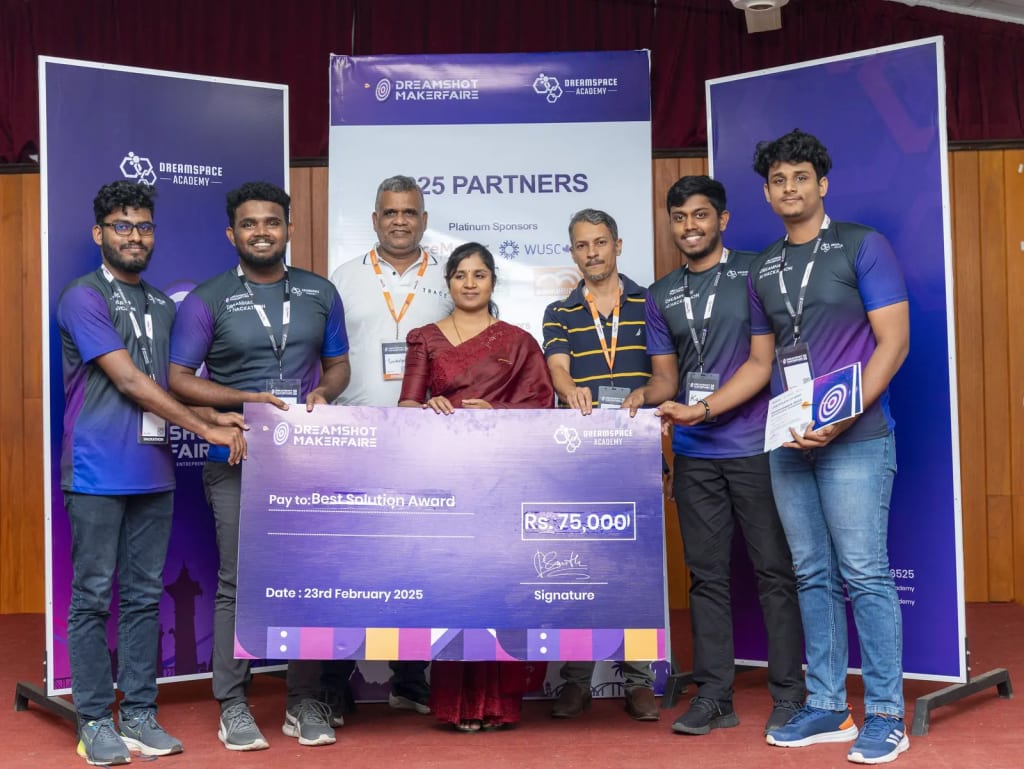
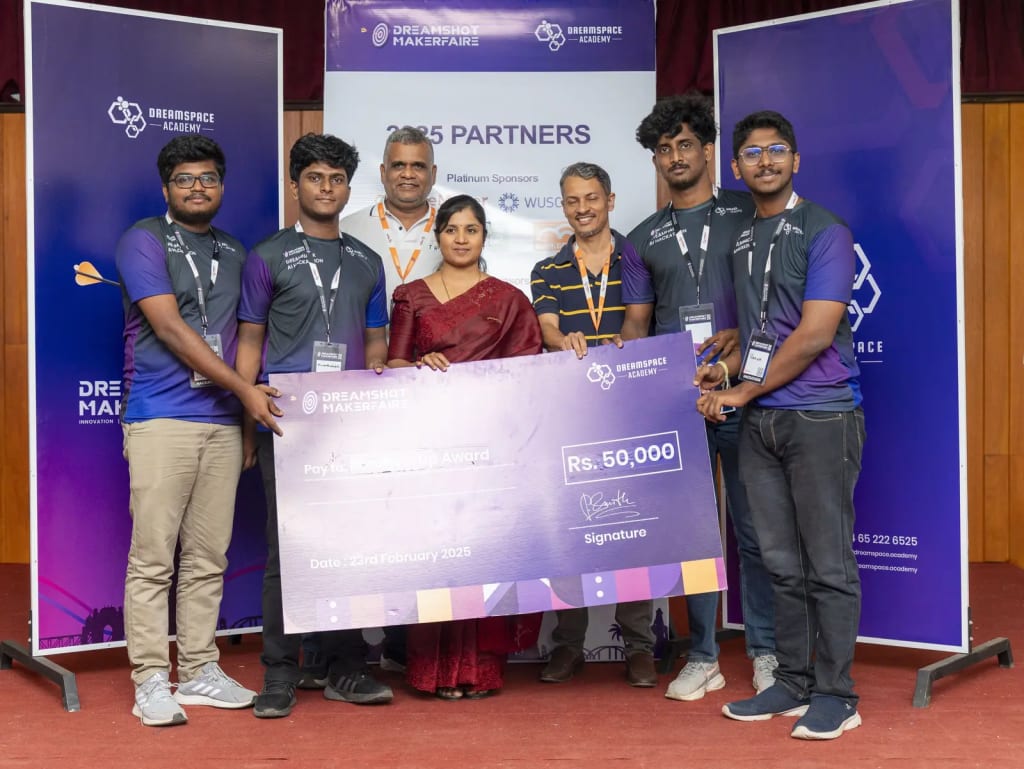
- Rs 175,000: a Best Solution Award of Rs 75,000 and two Runners-Up Awards of Rs 50,000
- Free to finalists
- Accommodation, meals, GPU servers, AI model access, workspace, mentoring and event jerseys
The AI for Good exhibition
For all four days, our AI projects were on show on the ground floor of DreamSpace Technologies, explained to visitors by student volunteers. Rathees Koneswaran and Sajeeth Ahamed of DreamSpace Technologies led AI for Good.
About DreamHack
DreamHack gave young innovators the chance to build technology for problems in their own communities with modern AI: large language models, computer vision and voice AI. It was open to recent school leavers, university students and young innovators, entering as teams. Every proposal had to address one of three focus areas:
- Green, blue and circular economies: renewable energy, sustainable agriculture, marine resources, waste reduction and recycling.
- Social cohesion and safety online: online safety, misinformation and cyberbullying.
- Accessibility and inclusion: solutions for people with disabilities, language inclusion, and access to education and healthcare.
It ran in two phases. In the online round, teams submitted a written proposal: the problem, the AI solution, its users and impact, technical feasibility, the data and equipment needed, and a system design. The organisers chose the finalists from these. In the finals, the teams came to Batticaloa, built their solutions over three days, and pitched them to the judges on the fourth.
Before the call went out, Govarthenan Rajadurai studied other Sri Lankan hackathons. That research shaped DreamHack's format: proposals first, weighted judging criteria, and code quality as one of the things judged.
What happened, step by step
| When | What happened |
|---|---|
| January 2025 | The call was published in English and Tamil, promising accommodation and meals for all finalists, Rs 75,000 for the best solution and Rs 50,000 for each of two runners-up. |
| January to February | 18 teams with 69 members registered and submitted written proposals. |
| February | Five finalist teams were selected and invited to Batticaloa. One, Wegmed, was later unable to come, so four teams competed. |
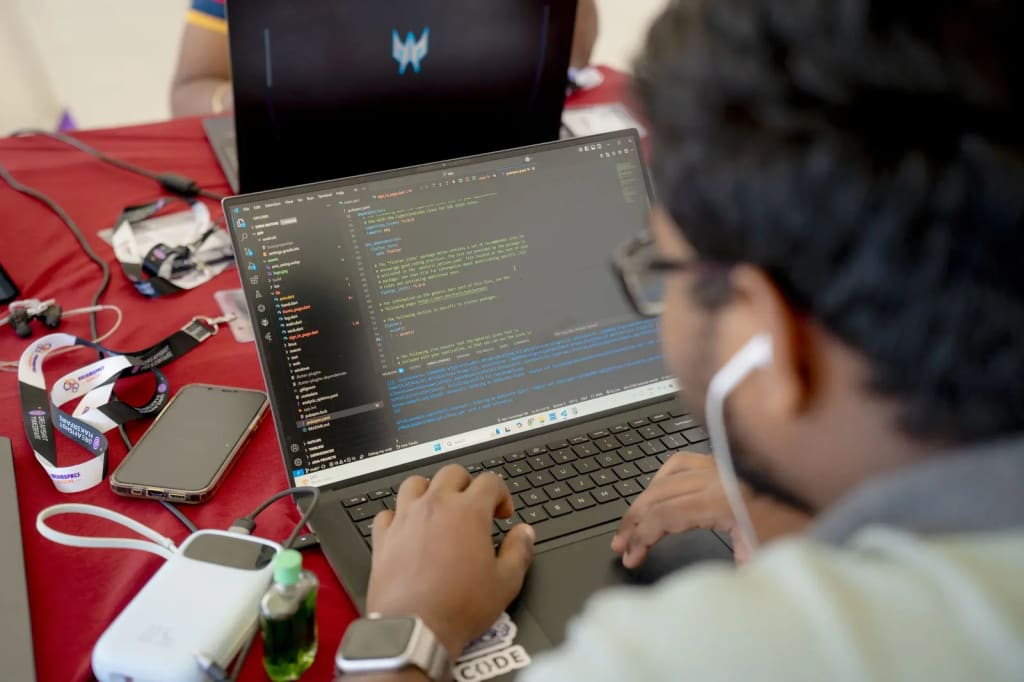
| Thursday 20 February, 10.30 am | The finals opened. Each team got its own code repository, and building began straight away. |
| Friday 21 February | A second day of building, with mentors and guest experts working with the teams. Each team signed an agreement confirming it owns its work. |
| Saturday 22 February, 5 pm | Submissions closed. Two teams also submitted working Android apps. In the evening the teams joined the MakerFaire reception. |
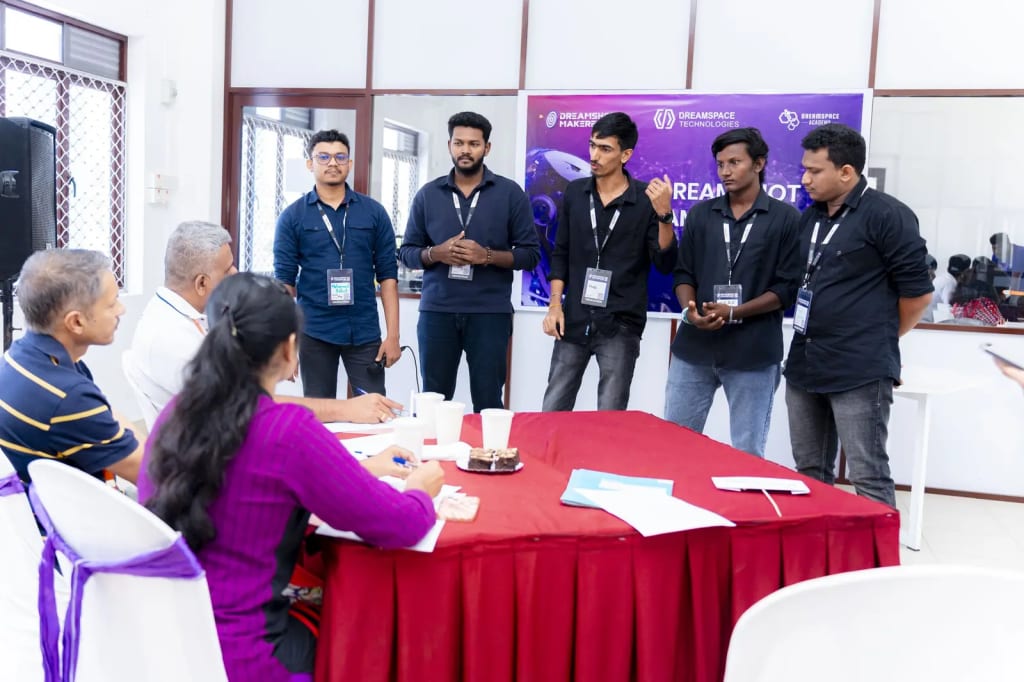
| Sunday 23 February | Final pitches to the judging panel, then the awards ceremony and the DreamShot Music Festival. |
Who took part
Eighteen teams with 69 members registered from ten universities and institutes: the University of Moratuwa, the Open University of Sri Lanka, SLIIT and its Northern campus, Sabaragamuwa University of Sri Lanka, ICST, the University of Ruhuna, the Informatics Institute of Technology, the University of Peradeniya and the University of Vavuniya. Most finalists travelled from Colombo, Sabaragamuwa and other provinces.
| Team | Institution | Members | Result |
|---|---|---|---|
| Phantom Orion | University of Moratuwa | 4 | Best Solution Award |
| Itachi | University of Moratuwa | 4 | Runners-Up Award |
| Zerobug | Sabaragamuwa University of Sri Lanka | 5 | Runners-Up Award |
| Metro Dev | Open University of Sri Lanka | 4 | Finalist |
| Wegmed | ICST | Selected, but unable to attend |
All 17 students who competed received a Certificate of Merit stating their result.
The ideas
The five proposals covered all three focus areas between them, and two of the five were built for people with disabilities.
SafeCom: protection against scam calls and messages
Phantom Orion, University of Moratuwa. Best Solution Award. Scam calls and fraudulent messages cause financial loss and distress, and older people are targeted most. SafeCom, with the user's consent, checks incoming calls and messages, rates each one as low, medium or high risk, and explains why: suspicious wording, a request for personal or bank details, or false urgency. In three days the team built an Android app backed by its own web service, and submitted a working app. The judges' comment: scam calls and messages are a huge problem in Sri Lanka, and this team tackled it directly.
An AI physiotherapy assistant
Itachi, University of Moratuwa. Runners-Up Award. Physiotherapy specialists are scarce and costly, and patients exercising alone at home often get the movement wrong. The team's app watches the user through a camera, tracks posture and joint angles, and corrects form as they exercise, with a chatbot for questions. At the finals they built a web app that guides users through prescribed physiotherapy and yoga exercises from a live camera feed.
Grownius: crop advice for farmers
Zerobug, Sabaragamuwa University of Sri Lanka. Runners-Up Award. Grownius recommends the best crops for a plot from its soil, nutrients, pH, humidity and temperature. An AI advisor then takes the farmer through seed selection, irrigation, pests, fertiliser and harvest. It also works in reverse: name a plant, and it returns the conditions that plant needs.
VisionPath: navigation for blind and visually impaired travellers
Metro Dev, Open University of Sri Lanka. Finalist. Public transport in Sri Lanka has no audio announcements or tactile paving, so many visually impaired people cannot travel without help. VisionPath is an Android app with three modes: obstacle guidance from the phone camera, an assistant that answers spoken questions about the surroundings, and a reading mode for signboards and documents. The team submitted a working app.
Smart waste management
Wegmed, ICST. Selected as a finalist, but unable to attend. The proposal combined sensors in bins, route planning to avoid overflowing bins, and computer vision to sort waste, reported on a dashboard for councils.
Judging
| Criterion | Weight | What the judges looked for |
|---|---|---|
| Problem definition and impact | 25% | A clear problem, local relevance and the potential scale of impact |
| Technical feasibility and innovation | 25% | Appropriate use of AI, available data, and how new the approach is |
| Sustainability and viability | 25% | Upkeep, cost, potential to grow and the resources needed |
| Code quality | 15% | Working features, AI integration, error handling, good practice and the commit history |
| Presentation | 10% | The quality and completeness of the final pitch |
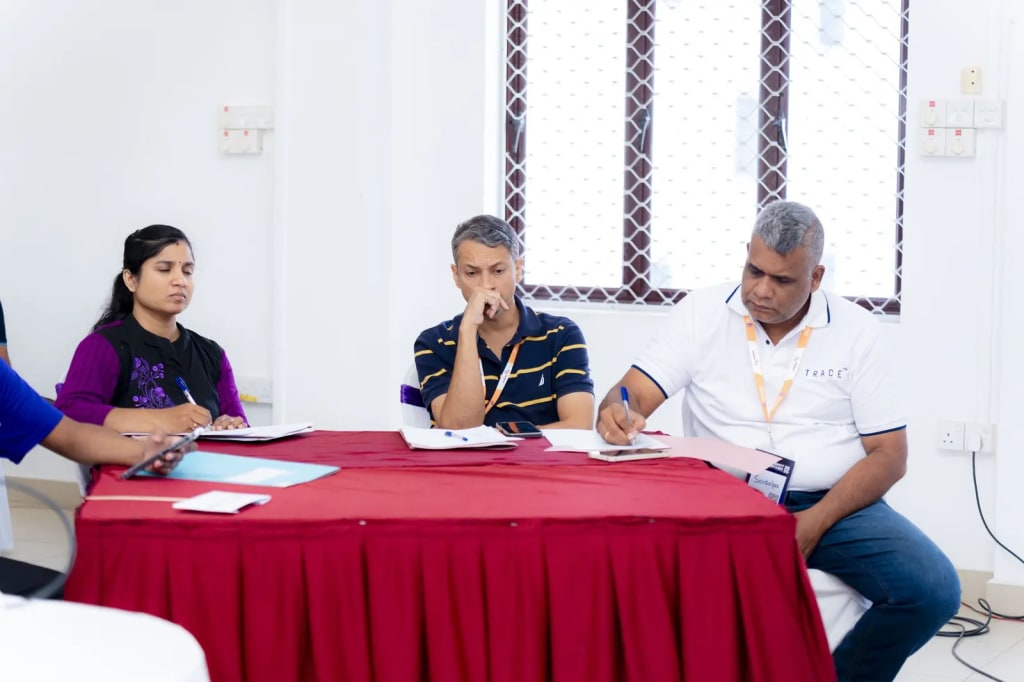
Before the pitches, Rathees Koneswaran and Govarthenan Rajadurai of DreamSpace Technologies reviewed each team's code. The judging panel then heard the pitches on 23 February and questioned each team. The judges also mentored the teams during the finals, on their problem, their solution and how to present it.
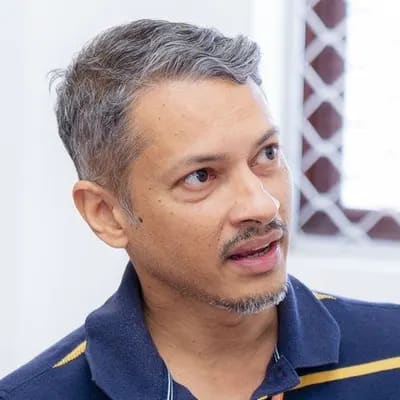
Heminda Jayaweera
Chairperson and Chief Executive Director, TRACE, Colombo
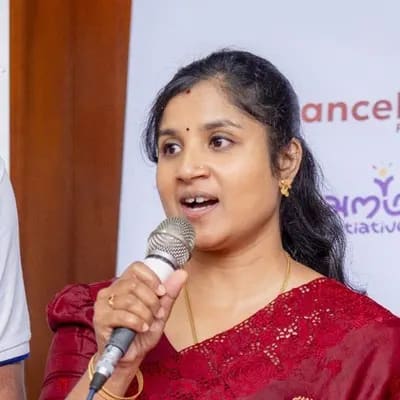
Dr Sriashalya Srivathsan
Lecturer in Computer Science, SVIAS, Eastern University, Sri Lanka
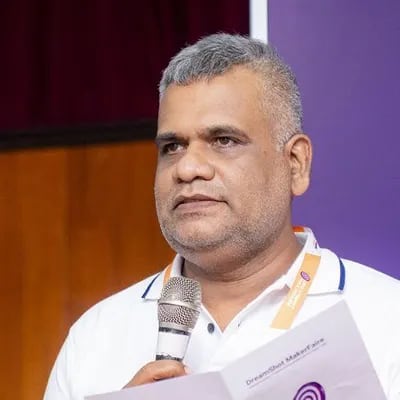
Dr Sankalpa Gamwarige
TRACE. Digital transformation specialist
Winners and prizes
| Award | Team | Project | Prize |
|---|---|---|---|
| Best Solution Award | Phantom Orion, University of Moratuwa | SafeCom | Rs 75,000 |
| Runners-Up Award | Itachi, University of Moratuwa | AI physiotherapy assistant | Rs 50,000 |
| Runners-Up Award | Zerobug, Sabaragamuwa University of Sri Lanka | Grownius | Rs 50,000 |
| Finalist | Metro Dev, Open University of Sri Lanka | VisionPath | Certificate of Merit |
The prizes matched what the call had announced. Each award was shared equally among the team's members.
Support for the teams
Finalists paid nothing to take part. With DreamSpace Technologies, we housed them in Batticaloa for the finals and fed them throughout. Three GPU servers were set up for training and running AI models, with access to AI models through their APIs, and each team had a private code repository. Each finalist received a DreamHack jersey, a participant badge, a Certificate of Merit and a place in the full MakerFaire programme.
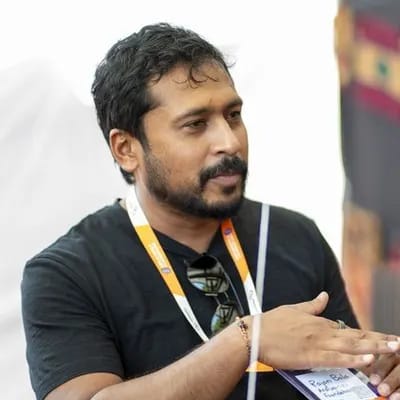
Rajan Bala
Tech for Good mentor, Aravanai. Mentored the teams at their tables and spoke to the whole room
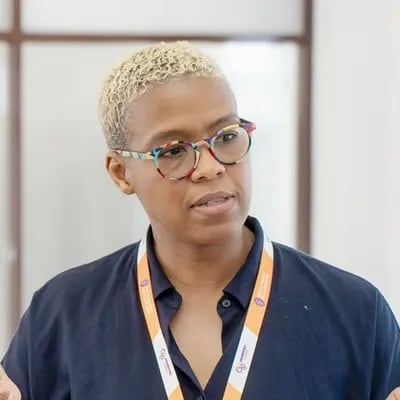
Prof. Raja Schaar
Product design, Drexel University. Led a session for the hackathon teams

Prihesh Ratnayake
Data scientist. Mentored the teams during the build
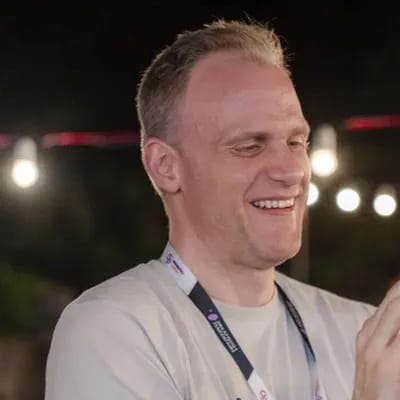
Marten Rauschenberg
AsiaBerlin Ambassador. Startup ecosystem mentor for DreamHack
Govarthenan Rajadurai
Hackathon lead, DreamSpace Technologies. Designed the format, ran registration and the proposal round, and reviewed the code
Rathees Koneswaran
Our director. Reviewed every finalist's code
Outcomes
- Four working prototypes in three days. Four teams built and submitted working code, and two delivered installable Android apps.
- The brief was met. Every proposal addressed a focus area, and between them they covered all three.
- Inclusion ran through the results. Two of the five ideas were built for people with disabilities.
- Students from across the country came to Batticaloa. Finalists from Moratuwa, the Open University and Sabaragamuwa spent four days in the Eastern Province.
- The teams own their work. Each team keeps full ownership of its code, designs and documentation.
More from DreamShot MakerFaire 2025
Overview
The four days at a glance, day by day.
Frontline Innovation
Robotics, AI with electronics and 3D printing in the MakerSpace, and the innovation showcase.
Inspiring Entrepreneurship
More than fifty stalls, the Entrepreneurs Next Level workshops and the pitch winners’ stories.
Creativepreneurs
The filmmaking bootcamp, music and the DreamShot Music Festival, media and illustration, Koothu and traditional crafts.
Reimagining Education
Play for Peace leadership training, school visits, the school project competition and a cybersecurity masterclass.
Short talks and panels
The opening panel on support for education, innovation and entrepreneurship, and short talks each morning.
Experts
The panellists, experts, mentors and master trainers who taught, judged and mentored.
Partners
The sponsors and partners who made the event possible, in their four tiers.