
Learning begins inside school
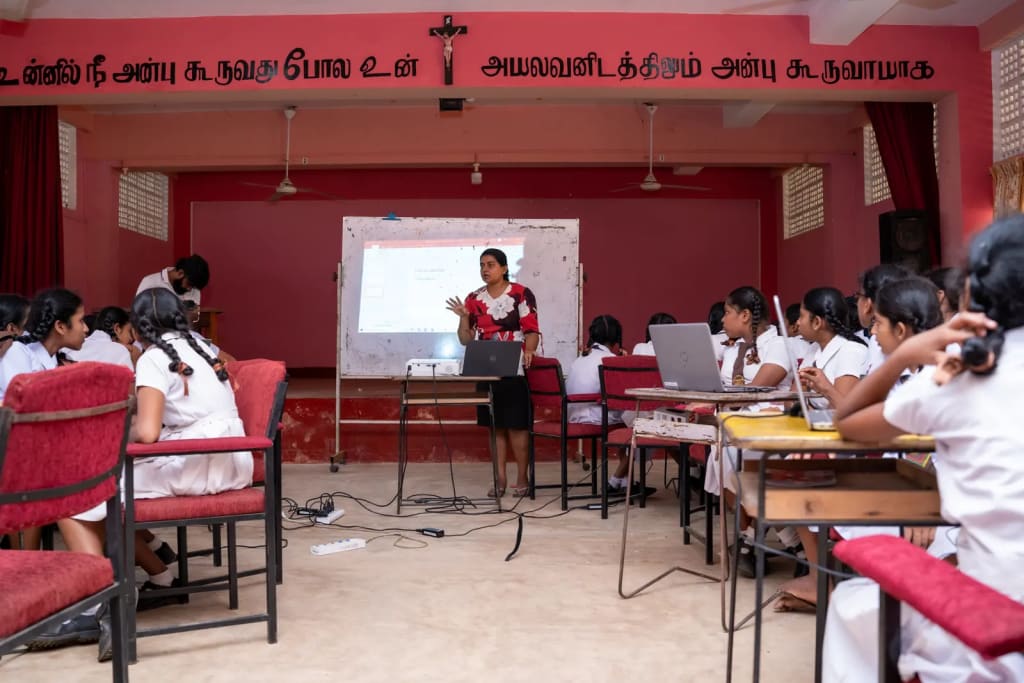
After seven years of working with young people, DreamSpace Academy recognised the need to begin earlier. It developed Empowerment Inside School (EIS) to reach children while they are still in school, so that students discover their abilities, build practical skills and see new possibilities for their futures.
EIS is designed as a six-year engagement from Grade 6 to Grade 11. Its core combines ICT aligned to the government syllabus with robotics and STEAM learning. Schools are selected based on barriers such as the absence of an ICT teacher or computer lab, weak ICT examination results, and rural or marginalised settings.
Delivery begins through coordination with education authorities, a needs assessment and baseline measurement. The academy works with written approval from Zonal Education Offices.
| Period | Progress |
|---|---|
| July to December 2025 | The programme begins in Batticaloa. Delivery expanded to Hatton later in the year. |
| March to August 2026 | 18 schools supported across Batticaloa, Kantale and Hatton. |
| October 2026 | Three schools each are due to commence through KathiraGreens in Vakarai and GROW in Nuwara Eliya. |
| November 2026 (anticipated) | Additional mathematics support proposed for 50 schools in Batticaloa District. Discussions with the Zonal Education Office remain underway. |
Reach
From March to August 2026, the programme supported 902 enrolled students across 18 active schools through 131 recorded sessions.
| Hub | Students | Schools | Sessions | Attendance instances |
|---|---|---|---|---|
| Batticaloa | 272 | 7 | 54 | 1,889 |
| Kantale | 419 | 5 | 32 | 2,055 |
| Hatton | 211 | 6 | 45 | 1,028 |
| Total | 902 | 18 | 131 | 4,972 |
Attendance instances count participation across sessions. A student attending several sessions contributes several instances. They are not an additional count of individual students.
The first year of delivery
Between July and December 2025, the programme reached 194 students in Grades 6 to 9 across five Batticaloa schools. In Hatton, it reached 306 students at two schools: 186 in ICT and 120 in robotics. Three schools in Mullaitivu had been identified but had not begun delivery, and were excluded from those results.
The 2025 and 2026 figures describe different periods and programme activities. They are presented separately and should not be added together as a cumulative count of unique students, or treated as a like-for-like growth measure.
The delivery model
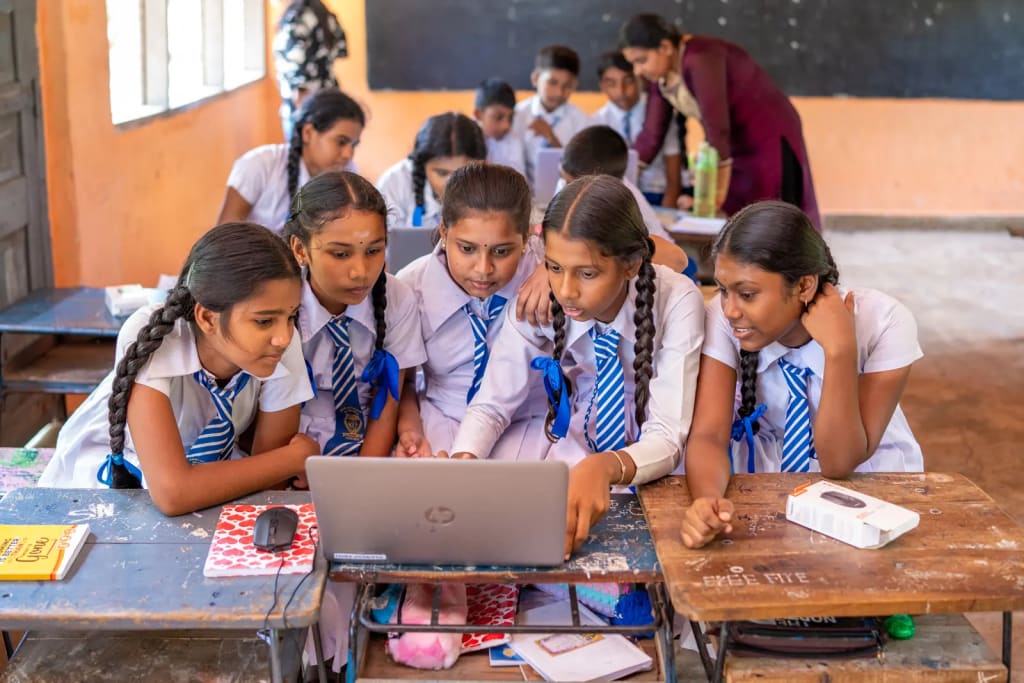
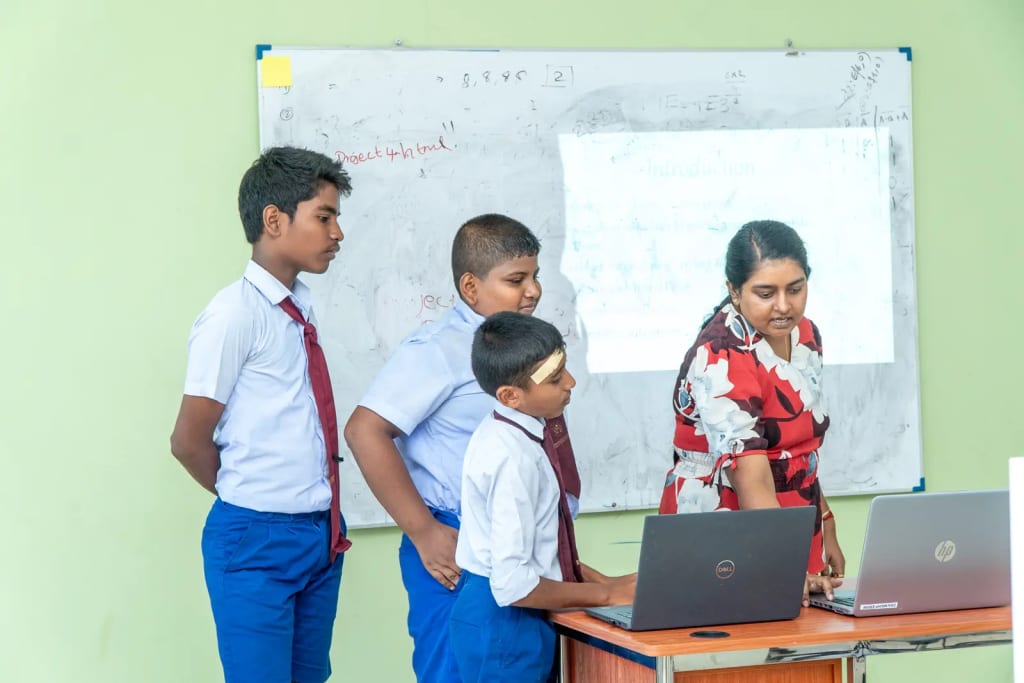
Practical ICT needs both equipment and opportunities to use it. EIS brings those opportunities into the school day. The academy takes a mobile set of five laptops and one projector between schools, bringing practical computer access directly into classrooms. Teaching combines ICT concepts with Scratch programming and practical tasks. Students then apply their learning through individual and group projects.
Learning through making
The wider EIS model includes electronics, sensors, servo motors and design thinking. These activities connect classroom concepts to a project that students can build, explain and improve. Teachers and trainers guide the process so that equipment access becomes a learning experience.
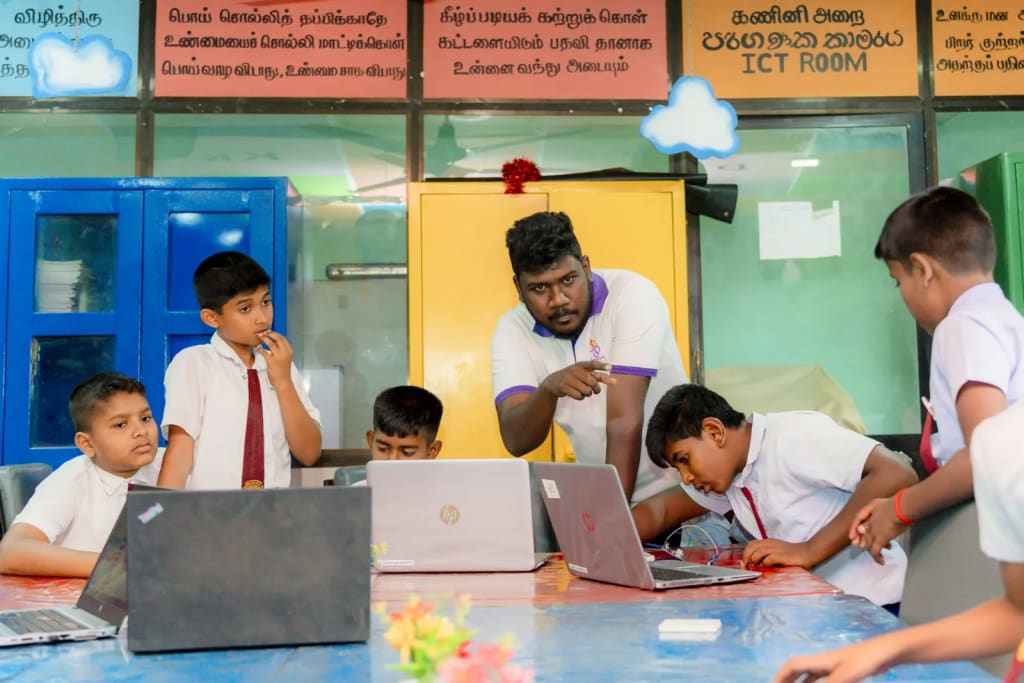
Schools have shared encouraging observations of higher attendance on EIS session days. The academy is working towards consistent attendance comparisons to understand this more clearly.
The active school network
The March to August 2026 delivery reached these schools across Batticaloa, Kantale and Hatton.
Batticaloa
272 students, 7 schools
Kallady Veloor Sri Shakthi; Manchanthoduwai Barathy; Navatkudah Tharmaratnam; Kallady Mugathuvaram Vipulananda; Navalady Kanishta; St. Theresa's Girls'; Saradha Vidyalayam.
Grades 6 to 9. 54 recorded sessions and 1,889 attendance instances.
Kantale
419 students, 5 schools
T/Kan As-Safa Vidyalaya (98); T/Kan Aysha Balika M.V. (149); T/Kan Waddukachchi GMMS (18); T/Kan Perathuveli M.M.V. (74); T/Kan Parameswara M.V. (80).
32 recorded sessions and 2,055 attendance instances.
Hatton
211 students, 6 schools
Ireby Tamil Maha Vidyalayam; St. John Bosco's College; Fruithill Tamil Maha Vidyalayam; Sri Pada College; Annfield T.M.V.; St. John Del Rey T.V.
Grades 6 to 12 represented, broader than the core Grade 6 to 11 model. 45 recorded sessions and 1,028 attendance instances.
Learning outcomes
A significant milestone is the inclusion of ICT assessment results in official student progress reports in six Batticaloa schools, with Zonal approval. The ICT assessment gives equal weight to written and practical components, 50% each, so that it reflects what students can do as well as what they can explain in writing.
The programme's assessment summary records improvement in ICT performance among approximately 50% of assessed students. The schools and the Batticaloa Zonal Education Office also report that the supported schools conducted ICT examinations for the first time since the subject entered the curriculum in 2015.
The academy is strengthening its assessment reporting to include cohort sizes, comparison dates and consistent improvement criteria. The percentage above is an indicative programme finding, rather than a complete evaluation of learning gains.
From the schools
A reason to come to school on Monday
At Manjanthaduvai Bharati Vidyalayam, on the outskirts of Batticaloa, some children face difficult family circumstances, and sustaining interest in education and regular attendance has been a challenge for the school. According to the principal, more children come to school on Mondays, the day EIS sessions take place. That has prompted a further question within the school: how the same interest could bring children into the classroom on the other days of the week.
The attendance difference has not yet been quantified.
For the first time, ICT marks on the progress report
According to the schools and the Batticaloa Zonal Education Office, the supported schools had not conducted ICT examinations or formal assessments since the subject was introduced into the curriculum in 2015, so students had no ICT marks in their progress reports. Following their engagement with EIS, the schools conducted ICT examinations. The academy prepared the papers, assessed the students' work and delivered each student's results to their school, and six Batticaloa schools added these marks to students' official progress reports.
This has prompted requests from other education zones. EIS already works with the Zonal Education Offices in Kandalai and Hatton. Nuwara Eliya has extended its support and requested assistance, and Kalkudah in Batticaloa District has requested expansion to schools needing support.
Curiosity becomes innovation
A 12-year-old student from the tea plantations in the Upcountry has been using robotics to respond to everyday challenges in his community. Through the Robotics Programme, the academy supported him with mentorship, tools and a place to experiment and improve his designs. One of his prototypes is a smart tea picker's bag with an automatic umbrella: a lightweight collection bag, a rain sensor that opens an attached umbrella, and a digital system that tracks the weight of the tea leaves collected.
He now mentors children of his own age from neighbouring schools. He presented his innovation to ARAM Initiative, a UK-based organisation supporting sustainable development initiatives in Sri Lanka, which expressed willingness to support further development, and he received a laptop for his work.
The bag remains a prototype. Further development and testing with workers will be needed to understand its practical benefits, and a wider rollout has not yet taken place.
Teachers
Teachers carry the learning forward
Together with SteamHead, the academy has supported STEAM teacher training across the Batticaloa and Kalkudah education zones, alongside sessions for principals and education-office staff. Several teachers have gone on to open their own Arduino classes, so that schools gain the capacity to continue practical learning themselves.
Supporting teachers alongside students
The delivery records include five teacher-training sessions. In Hatton, three sessions covered digital media literacy, AI in education and practical classroom tools, with a focus on using digital tools safely and critically in teaching. In Batticaloa, two sessions focused on practical digital learning and technology skills to support ICT, STEAM and student innovation.
Teacher feedback points to growing confidence with digital tools. The academy is strengthening participant tracking and follow-up to understand how this learning is applied in classrooms, and to document the teacher-led classes and their student reach.
What comes next
Beyond the computer lesson
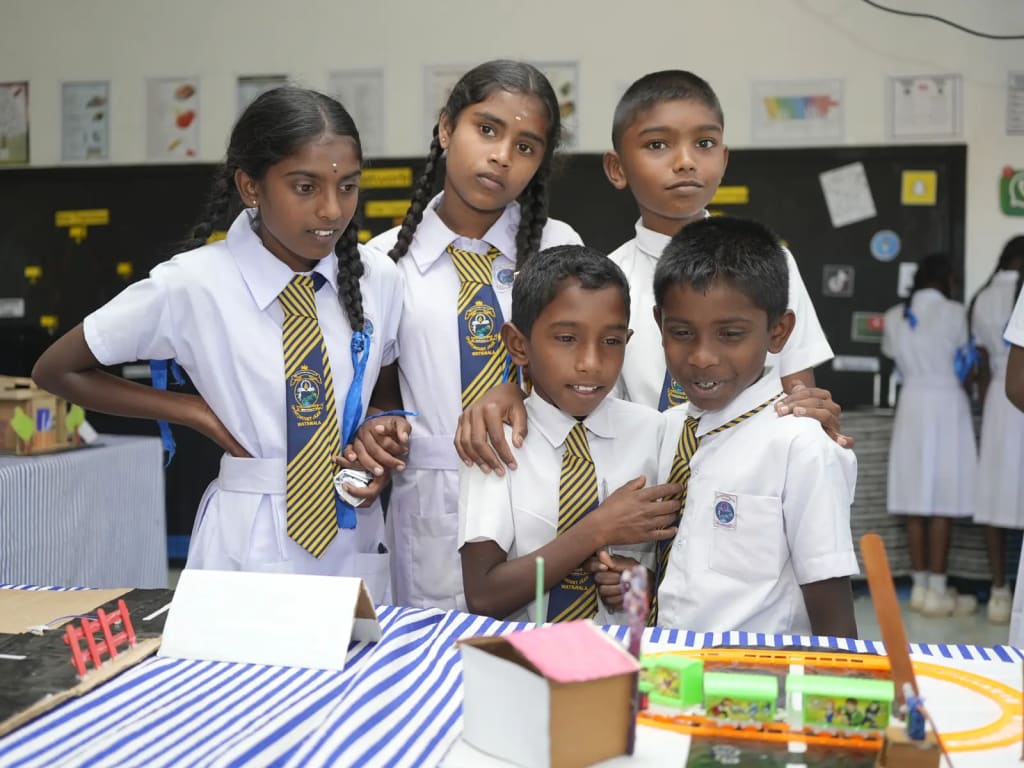
The ambition extends beyond digital skills, to leadership, entrepreneurial thinking and a sense of responsibility towards the community. Student-led Innovation Clubs are being developed as spaces for coding, robotics, design thinking and collaborative problem-solving, and an inter-school robotics and innovation exhibition is planned for participating schools in the Upcountry; both are next-phase priorities. The academy also plans to encourage conservation projects, climate awareness, waste management, recycling and community clean-ups, so that students connect their learning with the wellbeing of their school and the community around it.
Expansion through local partners
From October 2026, EIS will commence in six schools through partnerships in Vakarai and Nuwara Eliya: three through KathiraGreens in Vakarai and three through GROW in Nuwara Eliya. These are the next phase, presented separately from the 18 active schools in the March to August 2026 records. The priorities are to confirm schools and student cohorts, complete approvals and timetables, onboard trainers and teachers, prepare equipment and learning materials, and begin baseline and attendance tracking.
A proposed mathematics programme
As of October 2026, the academy is in discussion with the Batticaloa Zonal Education Office following its request for an additional mathematics programme across 50 schools in Batticaloa District. It would identify students who need additional support and provide targeted activities to strengthen foundational numeracy, mathematical thinking and confidence.
Anticipated commencement is November 2026, subject to final agreement and implementation planning with the Zonal Education Office. The 50 schools are a proposed scope and are not included in the delivered results.
Building capacity that lasts
The current priority is to strengthen the existing programme across 21 schools: regular practical sessions, trainer preparation, equipment, learning materials and teacher engagement, with consistent attendance and assessment tracking. Over the longer term the aim is better access to ICT learning labs and digital resources, and work with education authorities towards permanent ICT teaching capacity in underserved schools.
The 21-school priority is current; the 18-school results cover March to August 2026. Expansion counts are not added to these totals, and the mathematics support is a separate proposed scope.
Partners
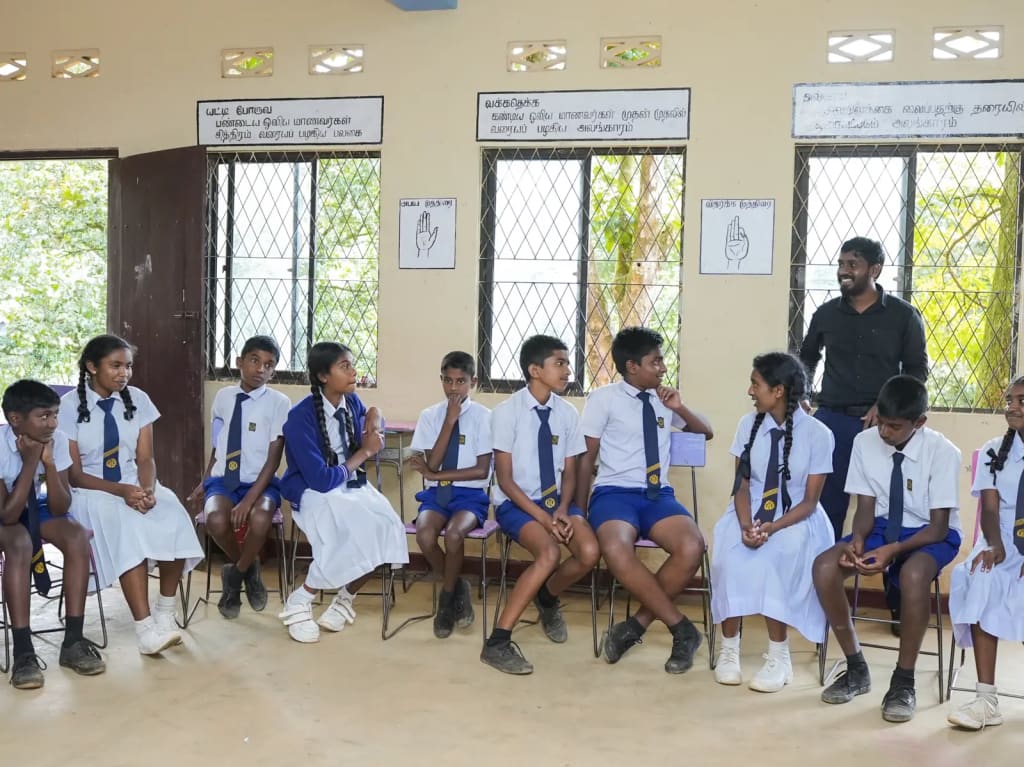
EIS works with regional organisations that understand their school communities, alongside coordination with the Zonal Education Offices.
| Cluster | Schools listed | Managed with |
|---|---|---|
| Batticaloa | 7 | DreamSpace Academy |
| Nuwara Eliya and Hatton | 7 | We Lead Lanka |
| Kantale | 5 | Inverta |
| Vakarai and Kalkudah | 3 | Kathira Greens |
The network register lists these regional allocations, which total 22 schools; an earlier summary recorded 19. These are being reconciled by reporting date and delivery status. The confirmed March to August 2026 results remain 18 active schools.
Project partners
The programme is made possible with the support of its project partners: ChanceMaker, Micro-Tech CNC, Knorr-Bremse and Impact Q.
Support the programme
Further support would go to trainer time, teacher development, equipment and maintenance, learning materials, travel between schools, and mathematics assessments and follow-up. [email protected]